
Times A Thousand
On choosing between motherhood and your ambition.
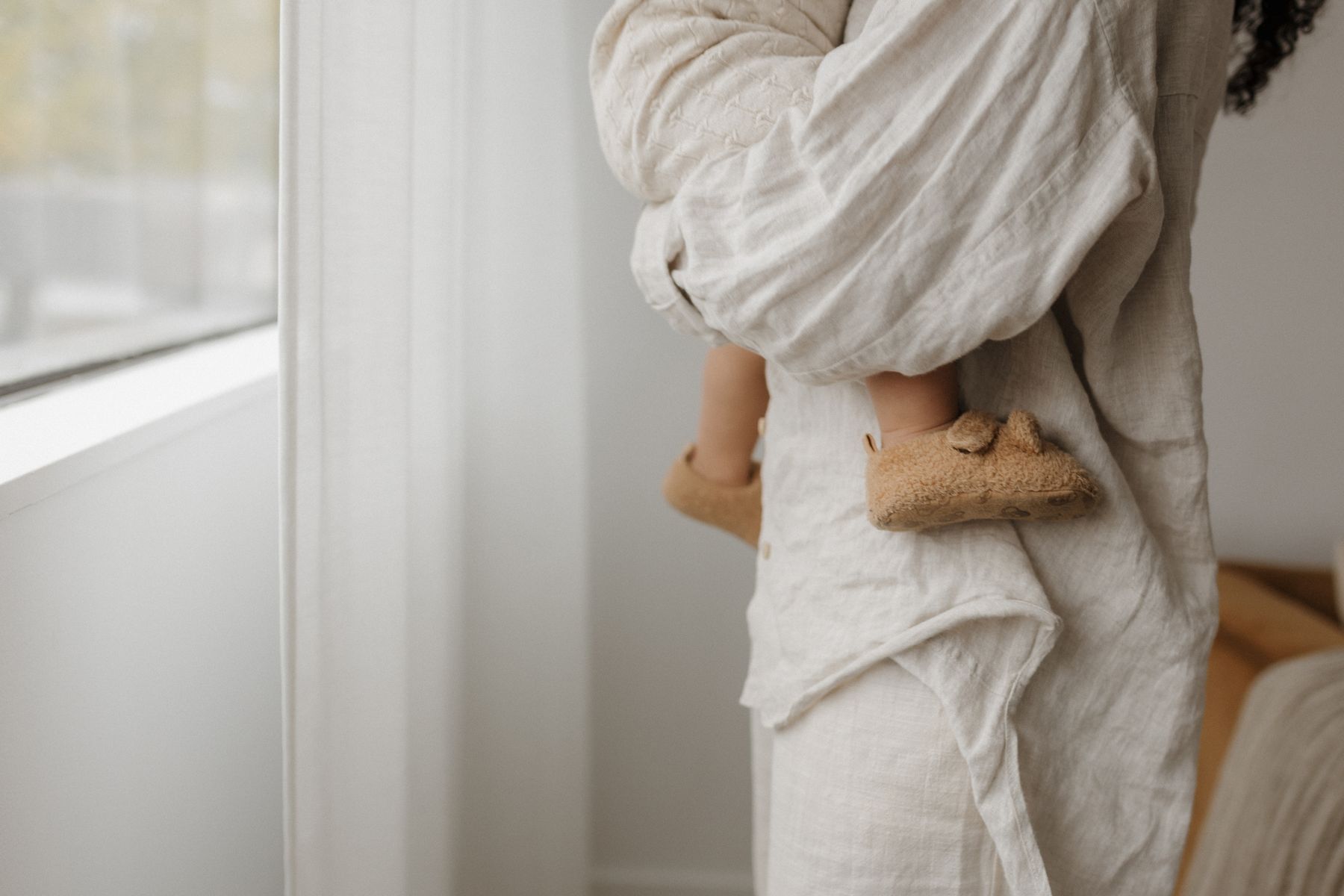
I had always been ambivalent about having kids. It wasn't a single fear so much as a cluster of them, layered on top of each other in a way I never fully untangled — the fear of the pregnancy itself, of the childbirth, of what my body would look like afterwards, but underneath all of that, the larger and more diffuse fear of losing myself to motherhood in some quiet and irreversible way. I was afraid I would give up my sleep and my career and the small private pleasures that made up my actual life. I did not want to sacrifice all of this at the altar of motherhood.
A lot of the women I admired had simply not had children, and looking at the ones who had, it seemed inconceivable that you could hold everything at once — the children, a fit body, a successful career, a regulated nervous system, a social life, any kind of real intimacy with your partner. Something always seemed to give. So I postponed the decision for as long as I plausibly could, telling myself I was waiting for the right moment, knowing on some level that the right moment was a thing I was inventing in order not to have to choose.
Then one magical morning in February, when I already suspected I was pregnant, the second line on the test appeared — clear and dark, unequivocally positive.
It is worth saying that two months earlier, at my December year-end performance appraisal, my boss had praised me generously and still declined to give me the promotion I had been so desperate to get. I had spent that year turning Finance around, implemented a whole new ERP system, and he didn't think I was ready. The role was held by someone else in any case, and I understood that unless that person left, the door would remain indefinitely closed. I had felt disappointed, of course, thinking that unless I was a man, I could never get to the top. And so on the morning of the two lines, what I felt, more than anything else, was a strange relief — a sense that God, or the Universe, or whatever it is that arranges these things, had made a decision on my behalf that I had been unable to make for myself. Everything is about to change now, I thought. There was a reason I hadn't been promoted; God obviously had other plans for me.
The first trimester crushed me completely. Nausea and exhaustion, compounded by back-to-back bouts of covid and flu that kept me home sick for nearly a month, made me actually grateful for not having gotten the promotion. I just struggled to push through each day, and in the face of being so physically reduced, the larger questions about what would happen to my career or life after having a baby became, mercifully, irrelevant. I couldn't think past the next meal. I focused on getting educated about birth, on the small ambition of having an unmedicated and uncomplicated delivery, on attending my ob-gyn appointments, on slowly preparing the nursery. I did not have a pregnancy photoshoot because I was simply too tired to care about being photographed. At thirty-five weeks I spent a couple of days in hospital with pre-term contractions, and after that my only concern was carrying to term. Then my only concern was not going so far past my due date that I would have to be induced. The horizon kept shrinking, and shrinking, until the only thing in it was the next thing — which is, I have come to think, how women have managed all of this since the beginning.
On Friday the 13th of October, in the early hours of the morning, the contractions started. I had read enough by now to know not to rush to the hospital, and so I went to my doula's apartment first, where she had me walking circles around her living room and doing exercises through the pain. By the time we did get to the hospital I was already deep in it, and a couple of hours later I gave birth to a healthy, strong girl.
And then, just as I was about to return from my four-month maternity leave, life threw the second curveball. The CFO of the company had accepted a chief executive role elsewhere, and I was being offered his position. Ironically, I was now being offered the role that I had been refused the year before I became a mother. The role I had been working towards since I was in high school and took my first Accounting class.
With the help of my partner — who eventually left his own job at a NASDAQ-listed company to become a stay-at-home father — and my mother, I managed to fly through that first year as both a new parent and a C-level executive. For a long time it looked, even to me, as though I had pulled off something extraordinary: as though it really were possible to "have it all," and that the women who had told me otherwise had simply lacked the will or the support system. Where I went wrong was in failing to take the postpartum period seriously, in treating it as a kind of administrative phase to be got through rather than the profound physiological and psychological event it actually is. I neglected myself almost completely, on the unspoken assumption that I could attend to myself later, once everything else was in order.
Eventually, of course, I hit the wall. I had become a shadow of my former self. I was no longer on top of my game at work. My brain was fuzzy from sleep deprivation and nutrient deficiencies. At home I had nothing left to give to a rambunctious toddler who deserved a present mother, not a depleted one. My libido had vanished, and so had the intimacy in my relationship. The body I was living in did not feel like mine. The weight had crept up instead of down. I was plagued by skin and scalp infections I had never had before, my immune system seemed to have packed up entirely, and I caught every virus my daughter brought home from daycare. My body ached in too many places, and I just felt so old. I had everything I had once dreamed of, and I could feel it slipping through my fingers while I was too tired to close my hand.
The truth, which is not often said, is that pregnancy and birth and postpartum can shatter a woman. They are normal biological processes, yes, and women have been moving through them since the species began, but the fact that something is so common does not make it any less life-changing. And yet society seems to have decided that simply because every woman does this, no woman is entitled to make any particular fuss about it — that we are supposed to just go on with our lives and get back to work and "snap back" like nothing ever happened.
It might be worth admitting, out loud, that being a mother is genuinely hard, and that the expectation of bouncing back is not only unrealistic but actively damaging. The postpartum period does not last forty days. It can take two or three years for your hormones to recalibrate, for your child to settle into anything resembling a rhythm, for intimacy to come back, for sleep to come back, for you to come back. And the woman who comes back is not the woman who left. Those years can be the darkest of your life and the most beautiful too, but there is no smooth sailing — and it's not always easy to navigate.
It might be worth admitting that your life is altered permanently, and that you will not bounce back to the person you were before, because that person no longer exists. It is OK to grieve her. It is OK to grieve the freedom of the life you used to have, or the body you used to inhabit, even as you love, completely and without reservation, the child who took both. It is OK to acknowledge that you do not have it all together, and that on many days the bar is simply that the child is fed and safe, and meeting that bar is enough. It is OK to not be one hundred percent at work when there is a sick toddler at home, or to be unavailable to your friends in the way you used to be, or to want, more than anything in the world, an hour alone in a quiet room.
Ellen Pompeo said something once that I keep coming back to. She said you cannot be a mother and give one hundred percent to your job, because part of you is always somewhere else — you have split into pieces, you are no longer simply yourself. And then she said: and you know what that does? It makes you more soulful, it makes you richer, it makes you funnier, it makes you feel more, it makes you more empathetic, it makes you angrier, it gives you a range of emotions you couldn't have imagined having without this person. You will be yourself times a thousand.
Times a thousand.
I think about that phrase often, because it captures something I could not have understood before I lived it. Motherhood did not make me smaller, the way I had feared it would.
It made me more. It expanded me, quite literally.
I am more of a woman, more of a human being. More capable of love than before, more resilient, more patient, more eager to create a better future for our children and the world they will inherit. More curious to learn, more in awe of how a tiny little human grows and develops skills and intellect right before my eyes, more grateful than ever for the roof over our heads and the food on our table.
I am more determined than ever to become the "highest, truest expression of myself" (in the words of Oprah). We are more, as mothers, simply because our bodies have done the extraordinary feat of carrying and giving birth to a child, and then raising and feeding and comforting that child throughout the years, pushing through our own discomfort, physical pain, sleep deprivation, and sometimes severe mental health issues. All mothers are more, and that's what I want all women to know. All women who fear pregnancy and motherhood, all women who are in the thick of postpartum, all women who do not want to be mothers and think, just like I used to think, that motherhood somehow makes you soft and weak. It does the opposite. It makes you more.